Voice AI vs. Traditional Chatbots in Hotels
Explore why text-based chatbots are giving way to advanced Voice AI, and how multilingual interfaces increase ancillary revenue and guest satisfaction.
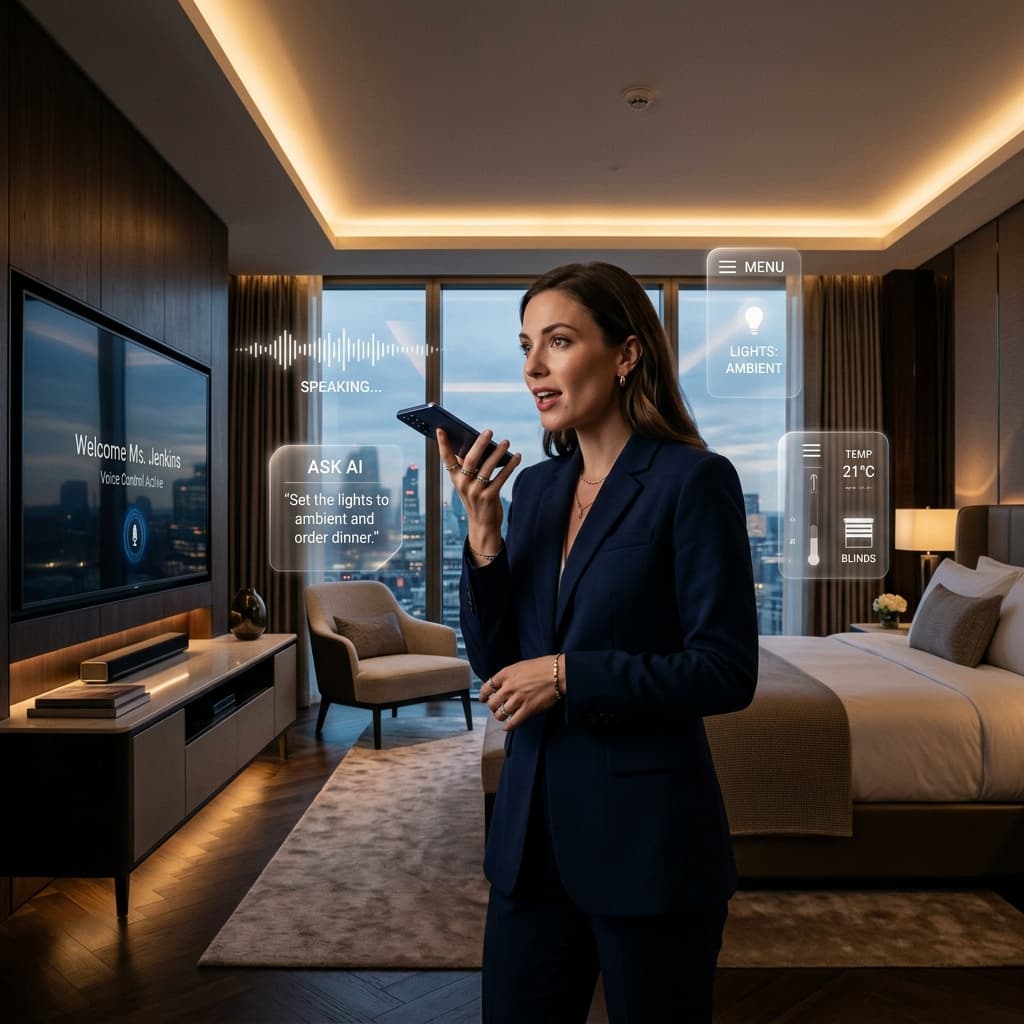
The Limitations of Text Bots
Traditional hotel chatbots rely on guests typing out requests. While better than a phone call to a busy front desk, text bots often struggle with complex queries or misspellings, sometimes resulting in a poor ROI (as seen in the famous 12% ROI 'robot rollback' in Japan).
Furthermore, older bots rely on rigid menus rather than true natural language processing, which fails to complement the 'human touch' expected in hospitality.
The Rise of Voice AI
Voice AI fundamentally changes the interaction model. A guest can simply say, 'I need two extra towels and a late checkout tomorrow.'
Advanced systems like Butler AI instantly parse the intent, translate it if necessary, and route the towel request to housekeeping and the late checkout to the PMS. This frictionless experience is proven to boost ancillary revenue by 20-35% through personalized, low-barrier upselling.
Multilingual Magic
One of the biggest advantages of Voice AI is breaking language barriers. International guests can speak in their native tongue, and the system seamlessly handles the request.
When guests feel understood and valued, repeat bookings soar—similar to Disney's predictive AI implementation that increased repeat bookings by 22%.